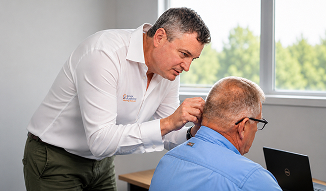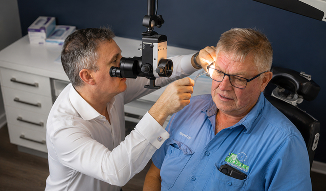
Knox Audiology has been caring for children’s hearing in Melbourne’s east for over 30 years.
Our accredited paediatric audiologists hold a Master's in Clinical Audiology, with specialist training and interest in paediatric hearing assessment.
We tailor every hearing test to your child's age and stage, from infant-friendly techniques through to standard assessments for school-age kids.
If your child's results indicate something requiring further review, we can refer to our on-site ENT specialists at Wantirna.
Assessments available at Wantirna, Boronia and Doreen from 9 months, and Surrey Hills from 5 years. No GP referral required to book.
You know your child best. Hearing concerns aren’t always obvious, so if any of the following sounds familiar, a hearing assessment is a good place to start.

“Excellent! My 4 year old has now seen all three audiologists at Knox Audiology Boronia. Excellent and friendly service from the reception right through to the consistent, knowledgeable and experienced Audiologists.
Thank you team!”

Before the assessment begins, your audiologist will talk with you about your child’s development, any concerns you’ve noticed and your family history. This shapes which assessments are most appropriate.
We use age-appropriate methods at every stage. For younger children this may involve play audiometry or visual reinforcement audiometry in a comfortable, friendly environment. Older children follow a process closer to an adult assessment. The right approach depends on your child’s age and how they’re feeling on the day.
Results are explained at the end of your appointment in plain language. You’ll receive a written report within a week, along with clear guidance on next steps, whether that’s monitoring, further assessment or a referral.
A hearing assessment doesn’t automatically lead to hearing aids or intervention. Your audiologist will guide you through what the results mean and whether they recommend further action.
Visual reinforcement audiometry (VRA) uses light and visual cues to measure how infants respond to sound. No verbal response is required.
Play audiometry turns the hearing test into a listening game. Children respond to sounds by completing a simple activity, making the process feel natural rather than clinical.
Standard audiological assessment, explained and paced to suit the child. Includes pure tone testing, speech testing and middle ear assessment. Available at all four clinics.
A quick, painless check of how the middle ear and eardrum are functioning. Particularly useful for identifying glue ear (fluid in the ear), which is very common in young children and can cause temporary hearing loss.
You don’t need a GP referral to book a children’s hearing assessment at Knox Audiology. You can book directly online or by calling your nearest clinic at Wantirna, Boronia, Doreen or Surrey Hills.
A GP referral isn’t required to book, but if you do have one, it may allow you to claim a Medicare rebate for your hearing test. Just ask our team when you book.
Children can have a hearing assessment at Knox Audiology from 9 months of age at our Wantirna, Boronia and Doreen clinics, and from 5 years at Surrey Hills. Different assessment methods are used at each developmental stage, to suit the child.
Signs that a baby may have a hearing problem include not startling at loud sounds, not turning toward voices by 3 to 4 months, not babbling or making sounds by 6 months, and showing little interest in sound-producing toys. If you have any concerns about your child's hearing, an assessment at Knox Audiology can be arranged from 9 months of age.
No referral is required to book a children's hearing assessment at Knox Audiology. You can book directly online or by calling your nearest clinic at Wantirna, Boronia, Doreen or Surrey Hills. A GP referral may allow you to claim a Medicare rebate.
Hearing in babies and toddlers is assessed using visual reinforcement audiometry (VRA), which uses light and visual rewards to measure how infants respond to sounds at different volumes and pitches. No verbal response is required, and the appointment is designed to feel calm and welcoming for both child and parent.
Common signs include delayed speech or language development, frequently asking for repetition, difficulty following instructions, struggling at school despite normal intelligence, and turning the TV up very loud. If a teacher has raised concerns about listening or attention, a hearing assessment is a sensible first step to rule out a hearing contribution.
Glue ear is a build-up of fluid in the middle ear that causes temporary hearing loss. It's very common in children under 5, affecting around 1 in 5 children at some point, and is one of the most frequent reasons a child's hearing may fluctuate.
A newborn hearing screen is a brief, automated test performed in hospital shortly after birth to check whether a baby's hearing pathways are responding normally. Not passing the screen doesn't necessarily mean a child has permanent hearing loss – it means further assessment is needed. Knox Audiology can provide a full diagnostic assessment from 9 months of age for children who have been referred.
Not necessarily. Whether hearing aids are recommended depends on the type and degree of hearing loss and how it's affecting your child's development and daily life. Your audiologist will explain the findings clearly and guide you through next steps which may include monitoring, further assessment, or referral. The decision is always yours to make, at your own pace.
Your audiologist will explain results clearly at the end of the appointment, with a written report provided within a week. If further review is needed, we can recommend specialists within our connected clinical network, including ENT specialists on-site at Wantirna.
A standard paediatric hearing assessment checks how well a child's ears detect sound. An APD (Auditory Processing Disorder) assessment examines how the brain processes what the ears hear. A child can have completely normal hearing results and still have significant difficulty understanding speech in noisy environments due to auditory processing differences. If this sounds familiar, both assessments may be worth exploring.
Early answers can make a real difference.