
The tiny hearing aids in those ads are usually IIC, or invisible in canal, hearing aids. They are a genuine product made by manufacturers like Phonak and Oticon, and you can get them from Knox Audiology. But they suit a minority of hearing losses. The size that makes them invisible is also what limits them.
If you have seen the ads, you already know the pitch: a hearing aid so small nobody will know you are wearing it. It is an appealing idea, and the discretion is real.
Whether they are right for you is a different question, and the answer depends on your ears more than your preferences. Here is what we tell clients who come in asking about them.
What are the tiny hearing aids in the ads?
Almost always an IIC hearing aid, short for invisible in canal.
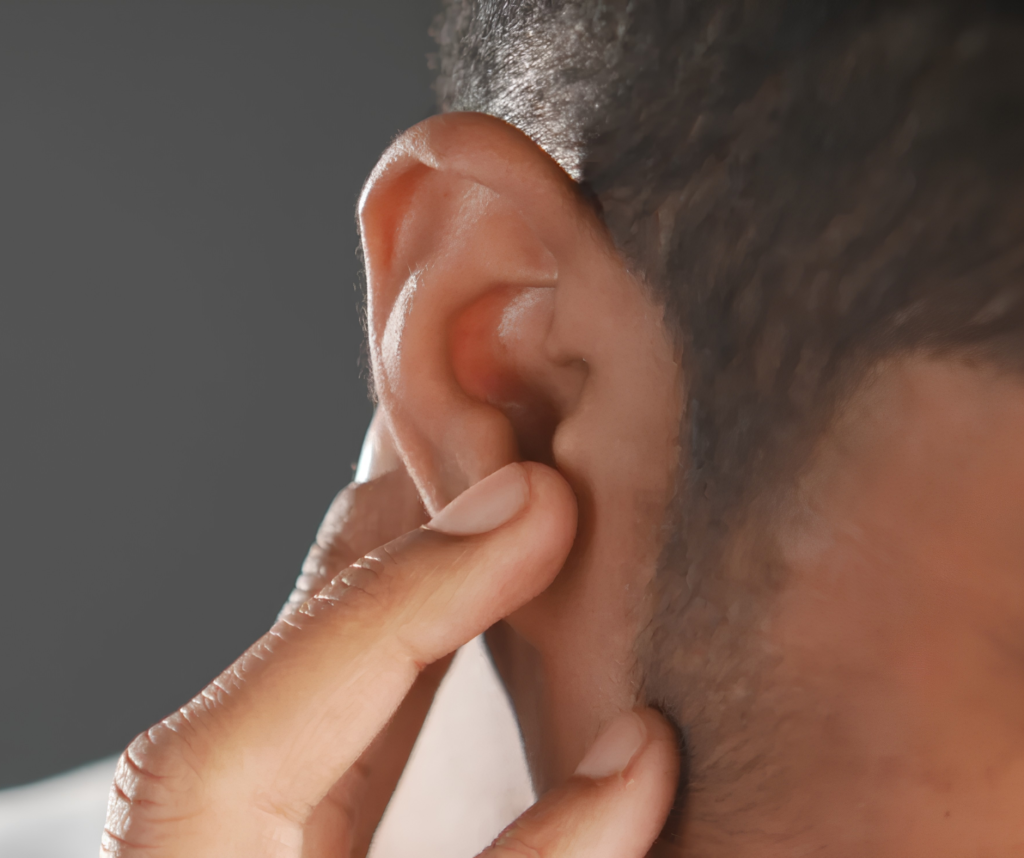
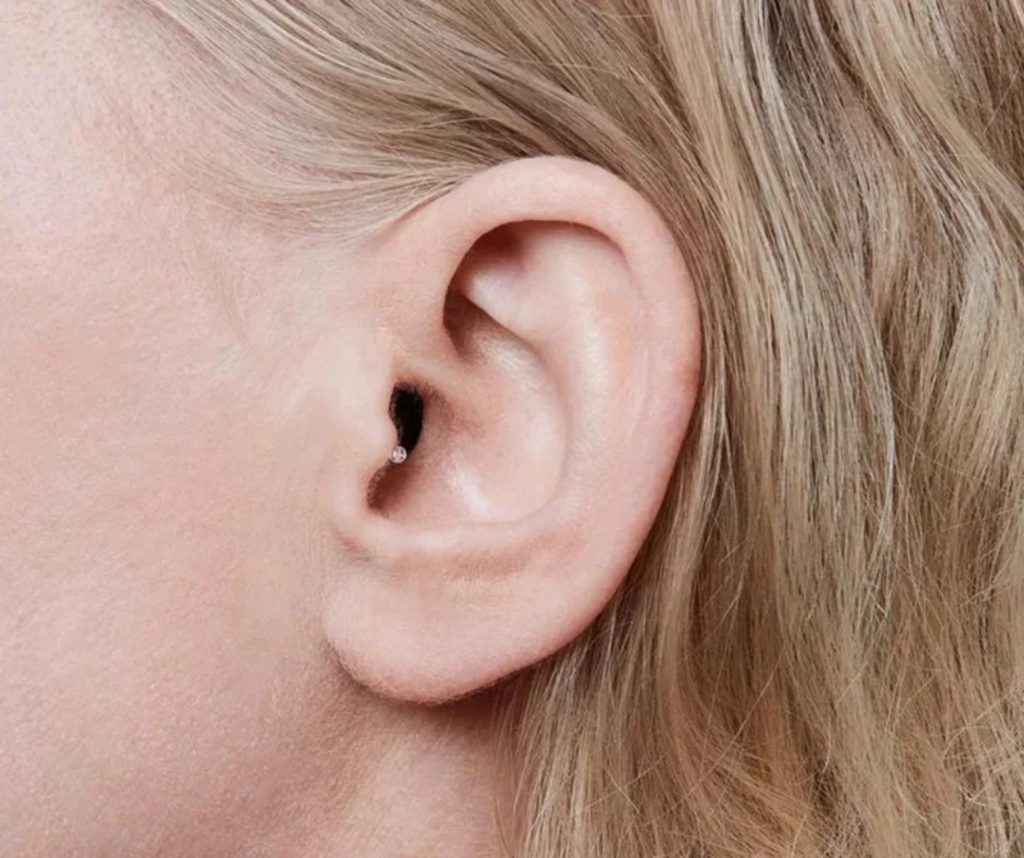
As the name suggests, an IIC is custom made from a mould of your ear and sits entirely inside the ear canal, deep enough that it is not visible from the outside. There is no part behind the ear and no wire. You remove it with a small pull cord.
They are made by the major manufacturers, so almost any audiology clinic that fits hearing aids can supply them, including us.
Are they actually invisible?
For most people, yes, or close to it. The fit depends on the size and shape of your ear canal. Some canals are too narrow or too curved to take one, which we can tell you at your appointment after taking a look.
If someone is looking straight into your ear from close range, they may see the pull cord. In normal conversation, no.
Who do IIC hearing aids suit?
They tend to work well if:
- Your hearing loss is mild to moderate
- Your ear canals are large enough to fit one comfortably
- You have the dexterity to handle a very small device and a very small battery
- Discretion matters more to you than features
For the right person, they are excellent. Custom made, comfortable all day, and genuinely unnoticeable.
Who do they not suit?
There are four common reasons we steer people elsewhere.
Your hearing loss is too great, or the wrong shape
Most age-related and noise-induced hearing loss affects high pitches more than low ones. You still hear vowels and sounds like “m” and “n” reasonably well, but lose “s”, “f” and “th”, which is why speech sounds mumbled rather than quiet.
When your low-pitch hearing is still good, we want to leave your ear canal open so those sounds reach you naturally. An IIC blocks the canal completely, which causes a problem called the occlusion effect.
The occlusion effect
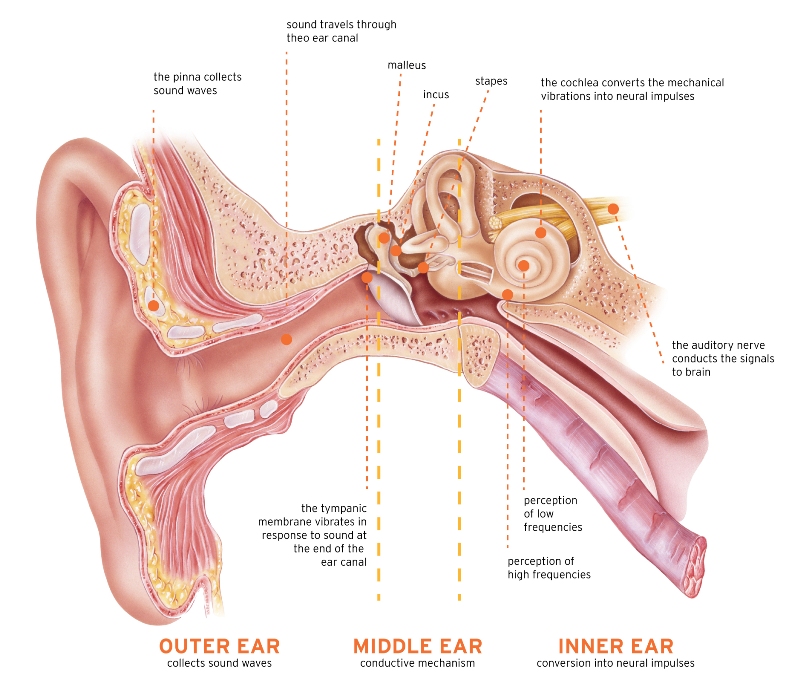
Block your ears with your fingers and talk. Your voice sounds loud, boomy and like it is echoing inside your head. That is the occlusion effect, and it is what a blocked ear canal does to your own voice.
For someone with good low-pitch hearing, an IIC can make their own voice genuinely unpleasant to listen to. It is the most common reason people abandon this style.
Batteries and dexterity
There is only so much technology that fits inside a shell that small. IIC hearing aids are not currently available as rechargeables, so you will be changing a battery, sometimes as often as weekly.
Those batteries are also tiny. If you have arthritis, tremor, reduced sensation in your fingertips or any dexterity difficulty, this style will frustrate you.
Fewer features
The same size limits mean less room for the processing, microphones and connectivity that help most in difficult listening situations. You generally cannot stream phone calls or TV audio to an IIC, and directional microphone performance in noisy places is more limited than a behind-the-ear or receiver-in-canal aid of the same price.
If following conversation in cafes and group settings is your main problem, a slightly more visible hearing aid will usually serve you better.
Are all the tiny devices advertised online actually hearing aids?
No, and this is worth knowing before you buy anything from an ad.
Some of the very small devices promoted on television and social media are personal sound amplifiers, not hearing aids. They amplify everything in the room by a fixed amount. They are not programmed to your hearing loss, because nobody has measured it.
A hearing aid is programmed to your audiogram, so it lifts the pitches you have lost and leaves alone the ones you have not. That is the entire difference, and it is the difference between clearer speech and everything simply being louder.
If an ad does not involve a hearing test, you are not being sold a hearing aid.
How do I know which style is right for me?
A hearing test tells us the shape and degree of your hearing loss, and a look in your ears tells us what will physically fit. Between those two things, the shortlist usually becomes obvious in one appointment.
It is worth coming in with your priorities rather than a product in mind. If invisibility matters most to you, say so. There are several discreet options besides IIC, and one of them may give you the discretion you want without the compromises.
Talk to us about discreet hearing aids
We fit IIC and other near-invisible styles, and we will tell you honestly whether they suit your hearing. If they do not, we will show you what does.
Call 03 9800 5697 or book a hearing aid consultation online.