
Tinnitus is the perception of sound with no external source, usually ringing, buzzing or hissing. Around one in three Australians has experienced it and one in six lives with it constantly. It is a symptom rather than a disease, it is generated by the brain rather than the ear, and while there is no cure, its impact can be reduced substantially for most people.
Tinnitus is commonly called ringing in the ears, but people describe it in many ways: hissing, humming, buzzing, whooshing, a high-pitched tone. It can be constant or come and go, sit in one ear or both, or seem to come from inside your head.
It affects people of every age and background, including children.
How common is tinnitus in Australia?
According to Soundfair, around one in three Australians have experienced tinnitus at some point, roughly one in six live with it constantly, and about 2%, or 500,000 people, find their tinnitus very distressing.
So it is not a fringe condition. It is one of the most common things audiologists see, and if you have it you are in very ordinary company.
What is tinnitus, exactly?
Tinnitus is a symptom, not a disease in itself, and this distinction matters for how it is treated.
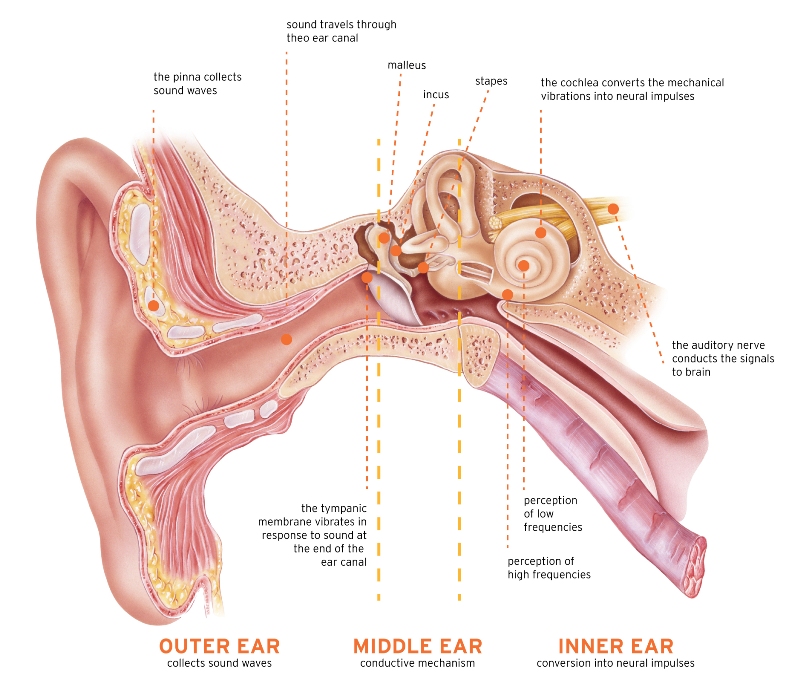
Although changes in the ear often trigger it, the sound is generated by the brain. When the auditory system loses input, usually through hearing loss, the brain compensates by turning up its own internal gain. With less real sound coming in, it starts highlighting its own background activity, and you perceive that as tinnitus.
This is why tinnitus so often accompanies hearing loss, and why treating the hearing loss frequently reduces the tinnitus. It is also why the intensity of tinnitus and the distress it causes are not the same thing. Two people with identical tinnitus can have completely different experiences of it.
What causes tinnitus?
The most common contributors are:
- Hearing loss, whether age-related or noise-induced
- Noise exposure, from a single loud event or years of accumulated exposure
- Earwax build-up or a middle ear infection, which are often temporary and treatable
- Neck or jaw problems, including TMJ
- Circulatory conditions and blood pressure changes
- Head or ear injury
- Certain medications, usually at high doses
Because the contributors vary so much from person to person, an assessment is less about naming one cause and more about working out which factors matter in your case. Some are fixable. Wax and infection are the obvious examples, and it is worth ruling them out first.
Is there a cure for tinnitus?
No, there is no cure that removes tinnitus permanently, and you should be sceptical of anything sold as one.
That is a harder answer than most people want, so here is the more useful one: the goal of tinnitus treatment is not silence. It is habituation, which means getting to a point where the sound is still technically there but no longer takes your attention or affects your sleep, concentration and mood.
Most people get there, and many get there without realising it happened. Effective treatment shortens that process considerably, and stops the cycle where distress makes the tinnitus more noticeable, which causes more distress.
Why can tinnitus feel so distressing?

Because the brain sometimes classifies it as a threat.
When that happens, tinnitus gets routed through the emotional centres of the brain rather than simply the hearing pathway, which triggers a fight-or-flight response. You become more alert to the sound, which makes it louder, which increases the anxiety. Sleep suffers, and poor sleep makes everything worse.
This cycle is the reason two people can have the same measured tinnitus and completely different quality of life. It is also, encouragingly, the part that responds best to treatment. Breaking the cycle is very achievable, and tinnitus does not inevitably get worse over time.
Does stress make tinnitus worse?
Yes, and it runs both ways.
Physical stress, such as neck and shoulder tension from long hours at a desk, and emotional stress, such as a difficult period at work or a bereavement, both raise your awareness of tinnitus. Then noticing it more raises your stress. The loop tightens.
Watch for poor sleep, irritability, reduced concentration and increasingly negative thoughts about the tinnitus. Those are the signals to act rather than push through. Acting early, by seeking support, reducing what stressors you can and keeping routines steady, makes a measurable difference to how much tinnitus affects your day.
What actually helps?
Start with your GP and an audiologist. A hearing assessment and a proper conversation about your tinnitus establish what is driving it, which determines what will work. Depending on what is found, a plan might include:
Treating the treatable. Wax removal or clearing a middle ear infection, where those are involved.
Hearing aids. Where hearing loss is present, these often reduce tinnitus directly by restoring input to the auditory system. Many also have built-in sound therapy.
Sound enrichment. Using low-level background sound so the tinnitus has less silence to stand out against, which is particularly effective for sleep and concentration.
Cognitive behaviour therapy. CBT-based strategies, with a psychologist or an audiologist, are the best-evidenced approach for reducing tinnitus distress.
Education. Understanding why the sound is there does more than people expect. Much of the distress comes from not knowing what it means.
Referral where relevant. ENT review to rule out medical causes, a physiotherapist for neck-related tinnitus, or a dentist for jaw and TMJ involvement.
The aim is not to chase a single cure but to reduce the impact and give you back control.
Can children get tinnitus?
Yes, including children as young as three, who often describe it in their own terms such as buzzy bees or a choo-choo sound.
If tinnitus is bothering a child it can affect sleep, concentration at school and willingness to join in. Reassurance helps a great deal, and so does assessment with an audiologist experienced in paediatric hearing. Education, sound enrichment and emotional support help children habituate and get their confidence back.
What about caffeine, alcohol and diet?
Some people notice their tinnitus fluctuates with caffeine, alcohol or tobacco, but responses are highly individual and the evidence for any general dietary rule is weak.
If you want to test a connection, do it properly: change one thing, give it a few weeks, and keep a simple note of what you notice. What we would not recommend is eliminating things from your diet on the assumption they are the cause, because most people find they are not, and the restriction becomes another source of stress.
Tinnitus care at Knox Audiology
We take a whole-person approach, which in practice means we spend the first appointment working out what your tinnitus is actually doing to your life before recommending anything.
That includes a comprehensive hearing and tinnitus assessment, a clear explanation of what is driving yours, guidance on sound enrichment and technology, CBT-based strategies, coordination with your GP, ENT, dentist or physiotherapist where useful, and follow-up so that improvements hold.
Book a tinnitus assessment
Persistent ringing, buzzing or hissing is common and it is manageable. We will work out what is driving yours and build a plan that reduces its effect on your sleep, focus and wellbeing.
Call 03 9800 5697 or book a tinnitus assessment online.